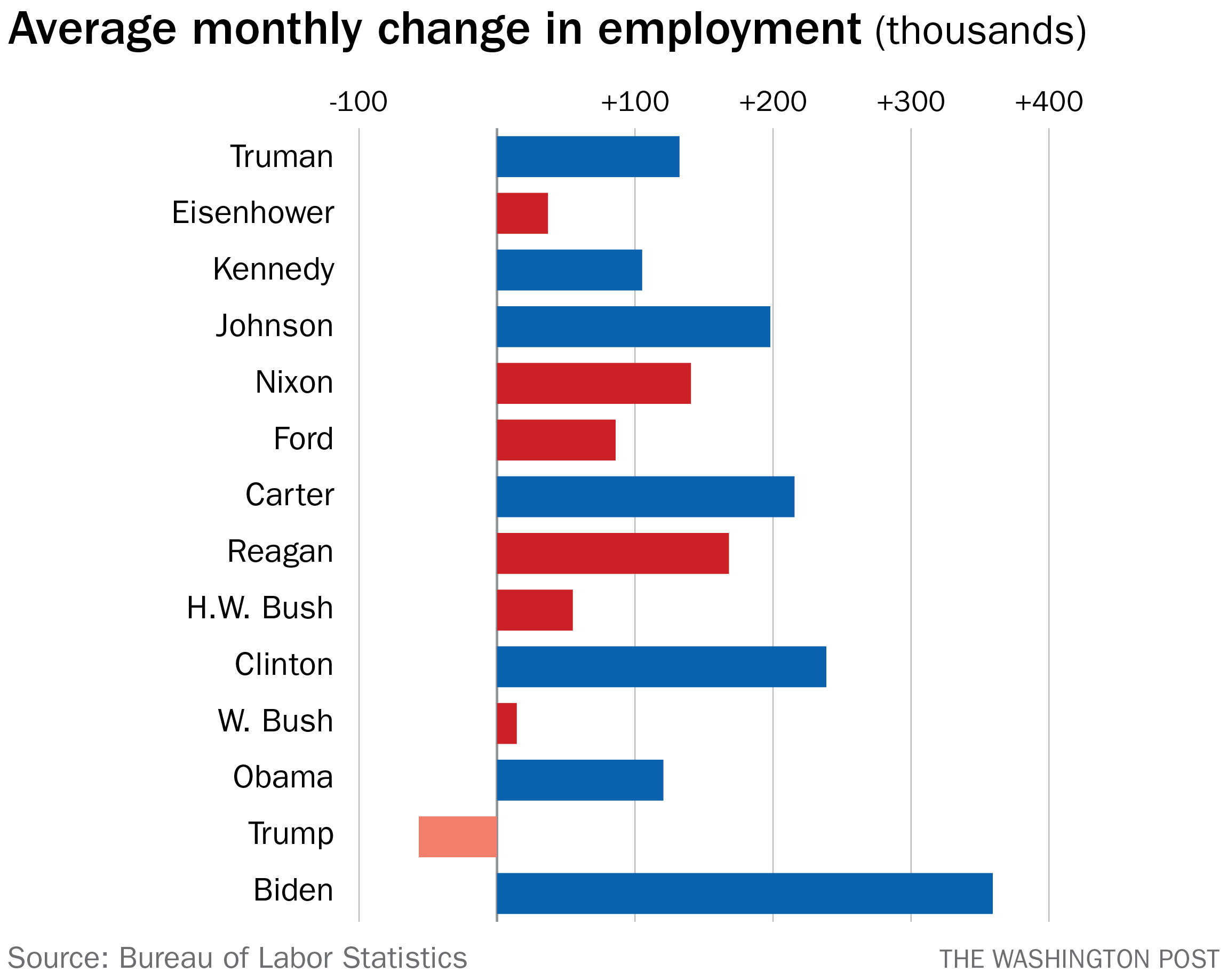
Since the end of WW2, Democratic administrations have presided over significantly higher job growth than Republican administrations.
https://arc-anglerfish-washpost-prod-washpost.s3.amazonaws.c...
It's even crazier when you look at the data since the end of the cold war in 1989. Then the ratio of jobs created is 50:1 for democrats.
How am I supposed to consolidate my power if the market doesn't crash so I can purchase residential and commercial real estate at bargain prices? Every third restaurant and business on Las Olas was shuttered in 2009, the buildings sold for next to nothing. Today there's one after another—Ferrari, Bugatti, Lamborghini, Porsche, Bentley, Maserati—parked on the street in front of those same buildings, all the while, Steve B. and I enjoy that coal fired pizza! /s
Yeah, they call this "accumulation by dispossession" and it's been a mainstay of neoliberal economics since it's inception roughly ~50 years ago:
https://en.wikipedia.org/wiki/Accumulation_by_dispossession
Don't know why you're downvoted, that such possibilities are allowed in a completely made up system that can be changed at any time to better society, and not just ~10,000 people across the world, is a gross indictment of the current system.
All neoliberalism has done is made us more alienated, privatized the public commons, destroyed the environment, and hasten income inequality to levels that were worse than the gilded age.
If something doesn't change soon... we'll you can use your imagination to fill in the blanks.
That Thatcher example was brutal. I have an interest in social housing (Austria, Singapore). The idea of selling it like that is insane to me, like if you said Taiwan sold TSMC for pennies on the dollar. And made it illegal to start another chipmaking company.
I'll see if I can dig it up, but I remember reading that on average, under democratic presidencies going back to FDR, the economy in general performs better than it does under a republican presidency. If I'm remembering right, it's not as simple as mere ideological differences because there has been changes within the parties in those intervening ~75 years but the trend still holds.
Found your article for you, as I was looking it up the other day:
https://en.wikipedia.org/wiki/U.S._economic_performance_by_p...
Carter has good employment, but terrible inflation making everyone poor in miserable. His Fed appointee, Paul Volcker raises interest rates, kills inflation, puts the country in recession, and drives unemployment up during Reagan's first years in office. Carter's job numbers look better than they should, and Reagan's worse, unless you look at the bigger picture.
Carter gave up the presidency to save America then. Volcker did the right thing.
The bigger picture being that this is political nonsense. We all know Reganomics.
They did not pay their bill for their own agenda then, and they have still not paid their bill for trillions in follow-on expenses.
They cut taxes and debt-financed war, which forced the US further into debt.
Reagan supported those interest rate changes. Reagan than continued to push deficit spending well after the recovery from those first couple years, a huge lasting trend in Republican administrations ever since.
It's also very hard to assume that Reagan being elected in 76 would've avoided the oil-driven inflation at the end of that decade.
But of course, we've decided as a country/media to generally blame Biden for non-policy factors that put the economy on a wild bullwhip ride from 2020-to-2023ish, soooooo... maybe Reagan can deal with getting the blame for the inflation too!
Surely some of that is lag time in economic policy.
The fact that consecutive Republican administrations in this graph fared even worse suggests that is not the case.
I’d have called Reagan very conservative, am I missing something?
Are you misreading the word consecutive as conservative?
> Surely some of that is lag time in economic policy
Why? What if constantly launching foreign wars, leveraging up the financial system and running up deficits isn’t sound economic policy?
Wasn't trying to be political, just making an observation that 4 years is probably too short of a time to credit policy changes within a single administration.
Threatening all of our allies with war and tarrifs is a great way to tank confidence in the US and its businesses. Ask me how I know.
Oh, so every Republican administration dating back to FDR did the same?
Did you look at the graph?
Eisenhower had two terms = 8 years - did poorly.
Kennedy + Johnson two Democratic terms in a row = 8 years, did well.
Nixon + Ford, two Republican in row = 8 years, did poorly.
Carter 1 term, did well.
Reagan Bush - 3 terms Republicans 12 years, did poorly.
Clinton 2 terms 8 years did well.
Bush the second, 2 terms 8 years did poorly.
Obama 2 terms 8 years did well.
Trump, 1 term did extremely poorly
Biden 1 term did well.
So this 4 years thing you're talking about you mean that we can't be sure about Biden, Trump, or Carter. Fair enough, is the 8 years good enough or is that also too short to draw a conclusion?
I suspect the administrations are as much a sign of the shifting tides than a cause.
Conservative approaches tend to be…. Conservative. Which is the opposite of growth.
WW2 really got the US economy going, so maybe the issue it a lack of scale in the warring?
I looked this up. "10 of the 11 recessions between 1953 and 2020 began under Republican administrations”. It seems Republican = Recession.
Ok, but is it cause or effect? Maybe Republicans do well when there is fear about the economy and a recession is coming.
There are many marginally employable swing voters who vote Republican when they have jobs and the Democrats in charge ask for taxes, then vote Democratic when they get put out of work and need a social safety net.
This is largely the crux of it.
GOP is the fun dad party and Dems are the mommy party.
Republicans run economy hot until it blows, then Dems get voted in to clean up. People get annoyed about taxes and regulation when economy is ok again, fun dad promises ice cream and pizza for dinner forever.. rinse & repeat.
CES establishment payroll survey monthly change averages is quite the choice of stats lol.
JOLTS is where stress shows first. Openings fall,[1] hiring slows,[2] quits drop,[3] and layoffs rise later.[4] Biden in particular shows the weakness of your provided stats.
[1] https://fred.stlouisfed.org/series/JTSJOL
[2] https://fred.stlouisfed.org/series/JTSHIL
Thanks for providing actual data and contributing to the discussion instead of the knee-jerk responses in the rest of the replies here.
The charts paint a much more precise picture on what is happening, and I actually don't see anything that strongly support it being a partisan effect.
I've always heard market forces and policies dont take effect until the following presidency.
Congress has a substantially greater impact on the business climate than the President.
And the president has enormous influence over what congress does (veto).
Of course everything is nuanced; the trend is merely interesting especially juxtaposed against people consistently voting for republicans for "economic" reasons.
That’s unless you have a Congress that lets the President usurp the pose of the purse that should be theirs and Supreme Court that rubber stamps everything he does
Except they have abdicated most responsibility, especially when the president is of the same party, for decades.
Many now talk like they work for the president.
Nothing happened in 2020 to affect this chart I'm sure. I would expect nothing less from the publication that falsely claimed Russians hacked into the US energy grid before an election.
9/11, 2008, and now AI job displacement is also bad luck
Many publications have made that claim about a Russian hack. Is it inaccurate?
Ok, but there were also 36+ months prior to covid in Trump's first presidency...
Correct. The unemployment rate was 4.7% in January 2017 and was 3.6% in January 2020. Or if we look at total private sector employment that went from 123,300,000 to 129,300,000 (its highest ever, at the time).
I mean, part of this is just math. If a government spends more, it’s literally injecting money into the economy, so of course you get more jobs and growth in the short term. That spending is the jobs. If you tighten spending to cut waste or rebalance the books, growth slows and jobs shrink, but that’s kind of the tradeoff when you’re trying to fix long-term issues.
Over the last few decades, neither party has really cared about deficits anyway. Everyone’s been spending, just at different speeds. The real question isn’t “who creates more jobs,” it’s whether the spending is efficient, sustainable, and actually creates long-term value. Eventually the bills come due, interest costs rise, and priorities shift from growth to just keeping the lights on.
So yeah, Democrats tend to show stronger job numbers, but spending more will almost always do that. Whether it’s good spending is a separate debate. Budget discipline isn’t partisan, it’s just basic economics.
> I mean, part of this is just math. If a government spends more, it’s literally injecting money into the economy, so of course you get more jobs and growth in the short term.
Thats not necessarily true. During Bill Clinton's presidency he cut the deficits and the debt and yet the economy saw very strong job growth.
https://www.factcheck.org/2008/02/the-budget-and-deficit-und...
https://en.wikipedia.org/wiki/Jobs_created_during_U.S._presi...
And Clinton (mostly Gore as VP) cut the federal civilian workforce by about 20%, while following the both the letter and spirit of the law, and not causing chaos.
I’m not sure how true this is given that both Clinton and Obama cut the deficits and in Obama’s case he did it despite complaints from the left.
Democratic administrations see less spending growth, though. Definitely not more. Look it up.
You're confusing rhetoric with policy.
Republican administrations have been creating way more debt than Democrats', so I don't think your point holds. What matters is where the tax money is going, and Democrats seem to be divesting a larger share to the working class than the Republicans overall, even if both have been mostly allocating it to the owning class.
If you think republicans lowered spending I have a bridge to sell. See two Santas strategy.
Post WW2 was a time of labor scarcity the US benefited from - but eventually that went away with global competition. The tech boom years were another labor scarcity time, and that’s also going away.
Both these times were plausible ways of entering the middle class.
What does economic theory say should happen to labor when scarcity ends but capital is strong? Does the economy expand until there’s more labor demand? Or will structural and monopolistic problems cause capital to benefit while suppressing wages - making us all serfs?
Any system based on exponential growth will have almost all people become serfs as even if their capital grows it falls behind the growth of older capital
Labor supply and demand do not reliably reflect the productive or social value of labor.
Link to report PDF: https://www.challengergray.com/wp-content/uploads/2026/02/CR...
The big question is “whose jobs”?
If it’s federal government employment that is dropping, or illegal alien jobs dropping, then some will view it positively (I’ve seen this perspective advanced on x.com).
Mostly Transportation, Technology, and Healthcare [0].
[0] https://www.cbsnews.com/news/layoffs-unemployment-jobs-econo...
As it turns out, no one wants to invest in infrastructure when all the inputs are going to be tariffed to oblivion. All else equal why invest in USA when you could invest somewhere where you can import the needed inputs much cheaper? Protectionism isn't enough to overcome losing access to world markets.
Eventually the protected industries will be totally disconnected from global markets causing them to lose global competitiveness, to the point they cannot even compete with the black market markups. And then you are maga, er mega, fucked.
> why invest in USA when you could invest somewhere where you can import the needed inputs much cheaper?
What markets do you have in minds? Can retail investors invest there?
I foresee something closer to a proportional increase of investment in all the remaining accessible markets, as US relative attractiveness decreases, rather than it moving to a specific other place.
So basically, everywhere else, proportionally. Even markets that have worse import/export restrictions, will still have relative changes in their attraction.
For a rough approximation non-US world index ETFs, which are available to retail investors.
These perspectives bother me a lot, because I want to invest passively, but if people are out there thinking like that, maybe nothing is priced right...
Priced right if money is moving from the bottom 90% to the top 10%. Stock market growth is because theres excess money and people need to invest the money. Supply and demand. There's reason why you can buy any ultra luxury car right(look at ferrari's revenue growth) and private jet industry is booming.
> maybe nothing is priced right
What does "priced right" even mean? For whom? When a public company makes billions in profits by selling insanely overpriced hardware, then that's "priced right" for the shareholders.
When a supermarket gives out 25% discount stickers to use, then the price of the good is closer to being priced right for the consumer, as long as you apply the sticker. There is, of course, no reason to assume that the supermarket would operate at a loss or close to cost. These 25% are already priced in and anyone not using the stickers is paying extra.
Nothing has been priced right ever since they've (the collective of anyone willing to sell something) figured out that they can ask for however-much people are willing to pay, which is quite more than what MY FELLOW HUMANS would need to pay.
For everyone else, who aren't willing to pay deliberately inflated prices, there's usually always some form of discount for some product, somewhere to be found.
In the context of investing there is a correct price for financial assets that is given by trading everything back to dollars in the present. There is one remaining parameter (the exchange rate between future payouts on different dates, the "discount rate"), but all the subjectivity reduces to that one number.
However if everyone is deluded about what the future payouts of different insturments will be, you can get $10 for $1 in one place and $0.001 for $1 in another (given that in both cases the influence weighted participants think they're selling you a dollar). That invalidates the picture of reducing the unknowns to the discount rate.
In your examples, you're talking about goods and services, which have different values to different people. They have an equilibrium price but as you say, that's not the "right price for everyone," like there is for say a bond.
> In the context of investing there is a correct price for financial assets that is given by trading everything back to dollars in the present.
This doesn't make sense though. The only reason I would buy an investment is if I believe it will grow in value from the point that I bought it. That means I'm pricing it at its future ccost.obviously other people are doing the same, so the actual cost of the investment will always rise above current value if people believe its a good investment.
The reason the stock market is generally "priced right", which we see in the strong long term returns of index funds, is because the winners get more money and get more influence, and the losers get less.
So you have a self selecting system, that have (over time) proved itself. Whatever you might think of the effect of certain effects (such as immigrant labors) you can end up reflecting in your investments, as others do - and if you end up being correct, you'll have more power to influence the price in the future.
The Challenger report contains large companies' announced future cuts. Not government, not small and medium business, not actual job losses. So neither, really.
A big part of the job losses were driven by Amazon and the end of their UPS contract.
Well those are incredibly ignorant and mostly likely strongly biased beliefs. When I worked for NASA and the DoE, I was surrounded by the most competent, hard-working, productive people I've ever known. Silicon Valley engineers are a joke compared to government engineers. Silicon valley people have newer toys and more flexible funding and no oversight, but government employees have vastly more impact and actual measurable utility. Only morons born into enough safety and security that they can be completely ignorant of how the actual world works believe the government is unnecessary and as many government jobs as possible should be deleted. The owner of that twitter platform you linked to killed several hundred thousand people last year, and again this year, and again next year, through sheer narcissistic incompetence. Is that a good source for any information at all?
The original roll out of Healthcare.gov is a counterpoint.
Looking at salaries, senior developers working for the government get paid about the same as entry level software engineers who get return offers at BigTech. Well actually senior developers in government only about 10%-20% more.
And even if you did work in pub sec, if you were good, why would you want to work for the government when you can get paid a lot more working in the private sector and consulting for the government?
I know how much senior cloud consultants working at AWS make working in the WWPS. I was there as an l5. Amazon is a shitty place to work. But I doubt it’s any worse than the government right now. GCP and Microsoft (not just Azure) both also pay their consultants a lot more than government employees make.
I’m not saying the government isn’t needed. But the best and the brightest aren’t going to give up the amount of money they can make in the private sector - especially now that government jobs are far from a secure paycheck
The people looking to view this positively will find or imagine a reason to do so, regardless of which jobs it is.
Ahh, yes, all the undocumented people working in tech...
You think illegal aliens working - by definition- illegally, show up on reports like this?
sigh If only the department of education was as well funded as the department of war.
It’s a non trivial question.
Estimates of criminal activity, for example, are frequently counted as GDP in places like the UK. And even if you’re working in violation of visa rules, the IRS will still expect and enforce taxes.
These people don’t have an SSN. You can’t pay taxes without one
Yes, the illegal alien jobs that are being reported to the government by big corps are dropping. You're spot on /s
Mostly SWEs (especially the type who act pissy on HN).
Important context is January is historically the month where most layoffs are enacted. Not saying the number is insignificant, just not entirely unexpected.
Yes. And this January's numbers are comparable to January numbers during the Great Recession.
The country desperately needs antitrust action to vastly increase.
We need all these monopolies and cartels broken up so that there is a dynamic competitive environment in all sectors of the economy
For me, it seems like a logical consequence of overheating the economy by cutting interest rates to zero during the COVID period.
I recall similar predictions from stimulus from the mortgage crisis. Things did not seem to play out predictably, I'm not sure all the old rules are as hard and fast anymore as people think.
You are off by several years on the interest rates, which have an 18-24 month impact. Also we have this idiotic and unlawful tariff war the US administration is currently perpetrating. But I'm certain AI is having a huge impact as well.
I'm unconvinced of the AI impact outside of the tech sector. But there's certainly a lot of uncertainty generally. Probably more senior people with reputations are in a better position but likely tougher for people with no records.
I agree generally as far as immediate losses. But I think longer term with AI soaking up a lot of investment dollars we see other places not seeing investment or hiring growth.
Graphic design and copywriting are possibly affected even worse than the tech sector, for one.
There's a lot of reason to think companies citing AI as the reason for their layoffs are just lying because it looks better to shareholders, and that AI kinda sucks and isn't used for much yet. https://budgetlab.yale.edu/research/evaluating-impact-ai-lab...
I don't have much involvement with graphic design but I agree that the impact on journalism and adjacent is pretty awful. Not sure how much is AI per se but certainly the economics have been pretty unfavorable. I'm not convinced it's just AI slop but but quantity can displace quality.
And yet the dow jones just passed 50K, an ATH.
That makes no sense...unless the economy is an a sort of death spiral where companies layoff employees, then stock goes, then companies layoff more, then stock goes up, so on and so forth.
Ouroboros. The economy is eating its own tail.
Yet housing costs keep increasing. The working class is being squeezed between employers who are suffering lost revenue and can't pay US wages, and landlords and mega-corp shareholders who won't budge on price. I foresee a slow protracted "collapse" (or really renegotiation) that will bankrupt stuck-in-the-mud billionaires (like Elon) as their means of recourse - law enforcement and the military - come under such powerful social coercion that no amount of money will stop them from siding with working-class-friendly new leadership like Mamdani, as the workers (who, despite what Elon tells himself in his robot fantasies, are still needed en masse), use their REAL voting power - moving their home to jurisdictions that are working-class-friendly.
I don't see any signs of that
Would be interesting to see impact by state, and by partisanship
My guess: heavily blue state, blue voter.
Chicken Little already told us. Armageddon is also coming, don't forget about that.
JOLTS data for January 2026 has been delayed, but don't expect those tea leaves to change your opinion about what the future holds.
I hear that the Washington Post just fired 1/3 of all of it's reporters.
Otherwise, if so many jobs have disappeared, does that mean that my garbage company no longer needs to employ a staf on every truck to drive it and empty my trash recepticle into the truck?
> does that mean that my garbage company no longer needs to employ a staf on every truck to drive it and empty my trash recepticle into the truck?
Do… do you not want them to do this?
Is that an argument of some sort? I can't quite identify the point.
I feel the same way about the article
No, but the garbage will need fewer pickups if consumption drops. Fewer pickups means fewer trucks means free drivers.